You buy goods from a supplier, pay the GST on the invoice, and claim input tax credit (ITC). Months later, you learn that the supplier never paid that tax. Now it’s your credit in the queue. Wouldn’t it be nice to know a supplier’s track record before you buy?
And that’s the idea behind the GST compliance rating. The law says it, but the rollout is another thing. So let’s unpack that so you understand what the rule actually says, where it is today, and what you can do right now.
Table of Contents
Quick Answer: What Is GST Compliance Rating?
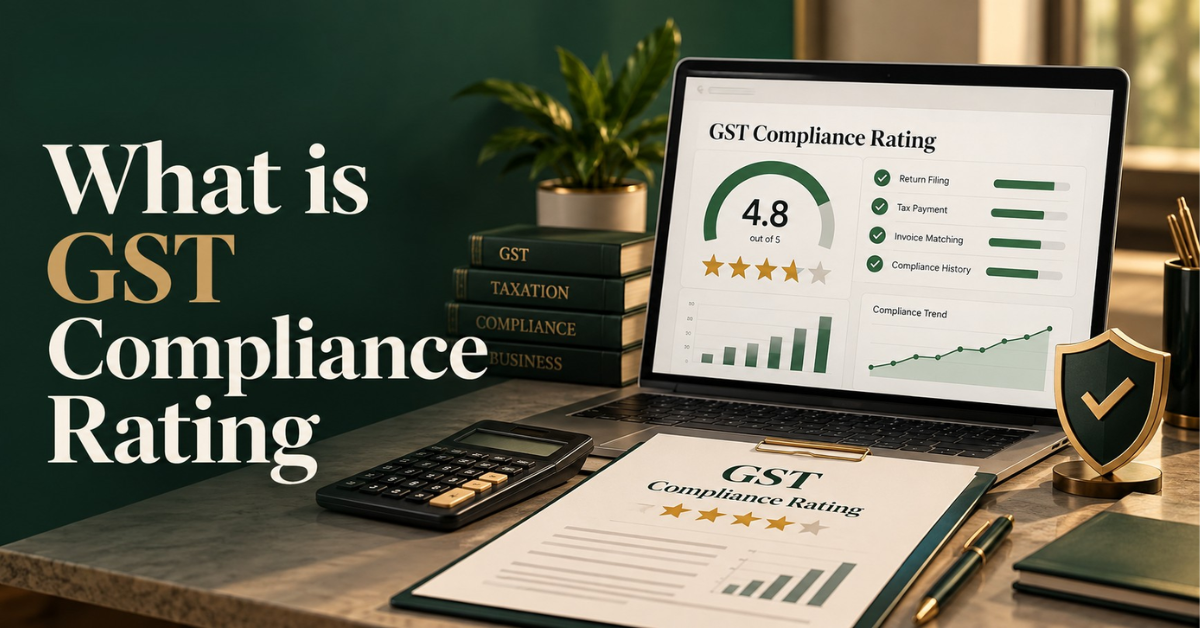
The GST compliance rating is a rating that the government may assign to each registered person based on their compliance record with the GST law. The legal basis is Sec 149 of the CGST Act, 2017. The score is to be periodically revised and shown to the public.
It’s like a credit score for your tax conduct. A strong score would reflect a strong record, and a weak one would reflect a weak record.
What Section 149 Actually Says
The section is brief. It has three parts:
- The government may assign each registered person a compliance rating score based on his compliance record.
- The score may be determined on prescribed parameters.
- The score may be updated at periodic intervals, intimated to the person, and placed in the public domain.
That is what it means, in plain terms:
- Covered: each person registered.
- What it measures: your history of compliance with the CGST Act.
- How it works: the details are to be put into rules, so they are in rules and not in the section.
- Who sees it: you get the score, and the public can see it too.
Note the word “might”. That little word matters, and we will return to it below.
Is the GST Compliance Rating Live Today?
Short answer: not completely, according to the sources I have checked as of October 2026. This can change, so always check on the official GST portal and in CBIC notifications.
A Tally Solutions explainer in March 2026 says that Section 149 provides legal backing for the rating. But the methodology, scoring pattern, and public display are yet to be fully operationalised. Likewise, IndiaFilings states that the complete rules and the procedure for obtaining the ratings are yet to be notified.
A word of caution comes next. Many online guides describe a live 0 to 10 score, refund thresholds, or downloadable certificates. I was unable to find official parameters to support those details. Think of them as commentary or expectations until the government issues the rules.
In a legal commentary, IndiaCorpLaw adds that the section is also discretionary, as it says “may”, and the parameters referred to in the section have not been formally notified.
Why GST Compliance Rating Matters
Even without a live score, the purpose of the rule shows the direction of GST enforcement. That is what makes the idea exist.
It Protects Buyers From Supplier Risk
Your ITC depends on your supplier doing his job. The commentary on section 149 says a rating would enable prospective buyers to assess the risk of a supplier’s non-compliance prior to transacting and thus avoid ITC reversals. This is the most practical advantage to any business which buys on credit.
It Shows Supplier Credibility
A clean record is a selling point. The same commentary says that a good score would show that suppliers are able to meet GST obligations on time, which helps them attract and retain customers.
It Helps Lenders and Creditors
Banks and trade creditors are already asking about tax history. A standard score would give a quick and comparable signal before extending credit.
It Encourages Better Habits
Companies treat the appearance of a record as a serious matter. Filing and payment on time become a matter of reputation and not just a matter of law.
What Might Go Into the Score?
The government has not released an official list. Experts see some familiar things. Commentary highlights timely payment of taxes, timely filing of returns, reconciliation of transactions, compliance with prescribed timelines, and cooperation with GST authorities.
Therefore, the likely constituents are:
- Filing of returns in time
- Pay your taxes on time
- Timely invoice upload
- Reconciling sales data with what suppliers report
- Returns and enquiries
This is a reasonable guess, not a formula. Whatever the final rules turn out to be, good habits in these five areas will protect you.
What You Can Check Today: A Practical Substitute
While you can’t look up an official score right now, you can still see how a supplier has been filing. For that, there is a Search Taxpayer tool in the GST portal. You can view the details of a taxpayer, like GSTIN status and details of returns filed, without logging in, and also view the return filing frequency.
This is a simple supplier check:
- Navigate to the GST portal and open the Search Taxpayer menu.
- Enter the GSTIN of the supplier.
- Make sure the status shows the registration is active.
- Check the return status for the recent periods and look for any gaps.
- Determine whether they file regularly; check the frequency of filing.
- Write down the result with the date, and repeat before major purchases.
Why would I? Because your credit is based on how your supplier pays. As per Section 16(2)(c) of the CGST Act, you can claim ITC only when the tax charged on the supply has been actually paid to the Government. You have the burden of proof as well. Section 155 says the burden of proof for an ITC claim is on the claimant. A supplier check won’t ensure your credit, but it does make a useful record.
Concerns and Criticisms
Even supporters of the rating system admit there are gaps. Authors of IndiaCorpLaw raise four points.
- 1. On paper, it’s optional. The word “may” allows the government to delay or apply the score unevenly.
- 2. Parameters are open. There is no obvious standard, and taxpayers are left wondering what improvements to make.
- 3. A lack of accountability. The section does not specify the authority that sets and updates the parameters, although a GST Council Secretary had indicated that GSTN would run the rating, the authors said.
- 4. Public display raises privacy issues. Businesses would have little control over how a visible score would affect their commercial relationships.
These are the concerns that are causing the slow rollout.
How to Build a Strong Compliance Record Now: Next Steps
There is no need to wait for a score. The habits you develop today will be useful in any form of rule.
- 1. File back on track. GSTR-1 and GSTR-3B, and one owner to be assigned, will have a calendar.
- 2. With the return, pay tax. Interest is charged on late payments, and it also leaves a bad record.
- 3. Reconcile ITC monthly.
- 4. Before you claim credit, match your purchase register with the auto-drafted GSTR-2B.
- 5. Check suppliers before big buys. Follow the steps in the Search Taxpayer section above.
- 6. Keep your invoice data accurate. Wrong GSTINs/tax rates/HSN codes cause mismatches later.
- 7. Kindly respond to notices promptly. Better a late but honest answer than no answer at all.
- 8. Build expectation into your vendor agreements. Ask suppliers to file on time. Ask them to take the loss if the default denies you credit. The Startup Gig says its vendor and service agreement work covers service commitments, liability caps, indemnification and termination rights, and it reviews counterparty drafts for “hidden obligations.” An attorney can tell you which clauses are appropriate for your deal.
A small finance team can get some outside help to fill in the monthly routine. On its homepage, under its Virtual CFO and Tax vertical, The Startup Gig lists GST and TDS compliance, accounting and tax compliance, and MIS and budgeting. Regular books will get your reconciliation done faster.
Need Help Staying on Top of GST Compliance?
Explore GST & Tax Compliance ServicesCommon Myths About GST Compliance Rating
- Myth: You can download your score from the portal today. According to sources I reviewed, the system is not fully operational.
- Myth: High scores will lead to refunds or audits. There is no official rule yet.
- Myth: Only large businesses are rated. Section 149 applies to every registered person.
- Myth: You can put compliance on the back burner until the score launches. Your ITC and notices are based on the rules of today, not tomorrow’s score.
Have Questions About Your Business’s GST Compliance?
Talk to Our TeamWrapping Up
The GST compliance rating is a legal measure with a distinct objective: to indicate who files and pays on time. There is a section on 149, but scoring rules and public displays are yet to be determined. Don’t believe any guide that says otherwise until you check official sources. Meanwhile, check your suppliers, reconcile monthly, and keep clean records. The Startup Gigs website has contract and compliance explainers and the Deal Diaries to help you think through the legal side of such supplier relationships. This article is for general information only and is not tax or legal advice; always speak with a qualified professional about your own situation.
FAQs
What is a compliance score under GST?
It is a score that the government can give to every registered person based on his record of compliance with GST law. It is allowed under section 149 of the CGST Act. The score would be updated from time to time and made public.
Is a GST compliance rating mandatory?
Section 149 says the government “may” assign the score, so the provision is discretionary on paper. According to sources reviewed in October 2026, the scoring rules are not yet fully operational, so nothing requires you to act on a score yet.
How can I check my GST compliance score?
Sources reviewed say the score is not yet publicly available. Meanwhile, you can check the status of a GSTIN and its return filing record by using the Search Taxpayer tool on the GST portal. Stay tuned to the portal and CBIC notifications for updates.
What affects a GST compliance score?
No parameters have been officially notified. Experts expect timely returns, timely tax payment, prompt uploading of invoices, reconciliation, and cooperation with authorities. Creating those habits today will serve you well under any final rule.
Does a GST compliance rating affect input tax credit?
Your ITC today is conditioned on the Section 16 conditions, such as the fact that the supplier has actually paid the tax. The rating is designed to assist buyers in evaluating supplier risk but does not substitute for those legal conditions.